
How to review an online English lesson in 10 minutes
Published

You do not need to replay or rewrite an entire online English lesson. Choose up to three things you could not say but expect to need again. In ten minutes, capture the situation, verify one sentence, retrieve it without looking, and check how it sounds.
Test it again after a gap, then use at least one item in your next lesson. The goal is not a beautiful notebook. It is to find out whether last lesson’s missing phrase is available in your next conversation.
Choose only three phrases worth reviewing
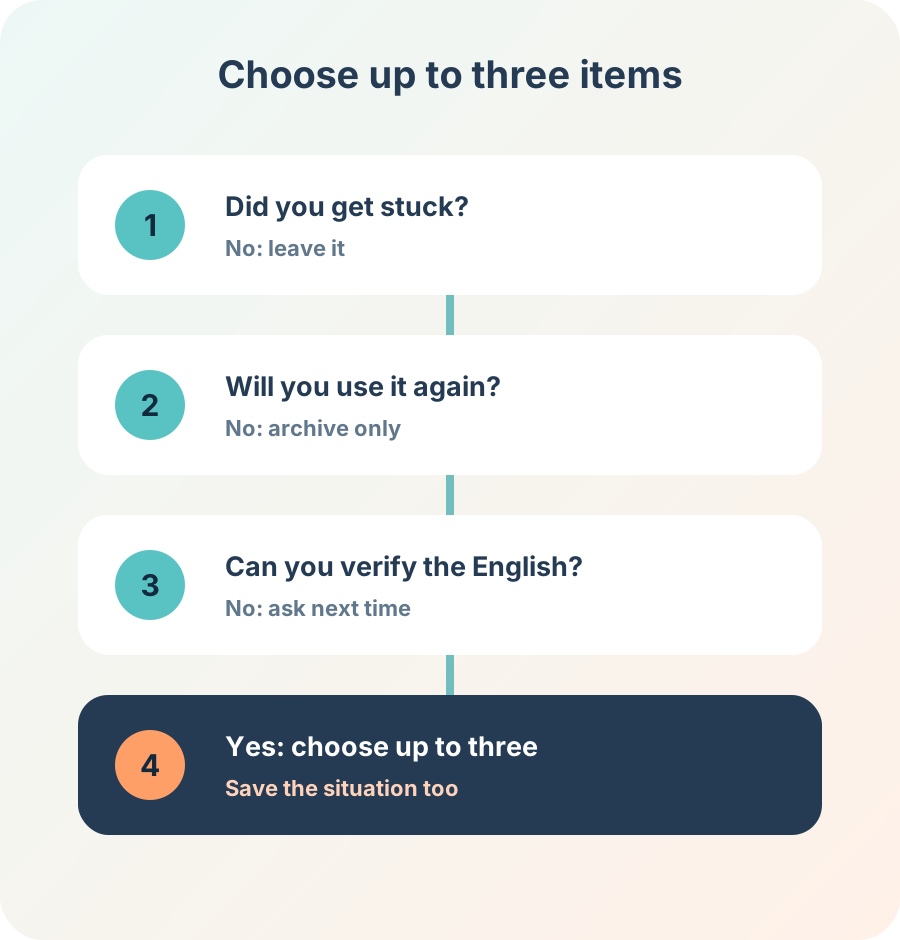
Keep an item when all three statements are true:
- You got stuck, were corrected, or were misunderstood.
- You are likely to need the idea again at work, while travelling, or in everyday conversation.
- You can verify an English sentence through the teacher’s chat, lesson material, or a reliable dictionary.
Suppose your teacher asks about your weekend. You want to say that you eventually stayed in and relaxed, but the words do not come. First save the situation:
Situation: I was asked about the weekend and wanted to say that I eventually stayed home.
Then verify one usable sentence:
I ended up staying home and taking it easy.
There are other natural answers. Starting with five alternatives, however, creates another choice when you need to speak. Confirm one sentence that fits your meaning, practise that one, and add alternatives only when you need them.
A ten-minute review after the lesson
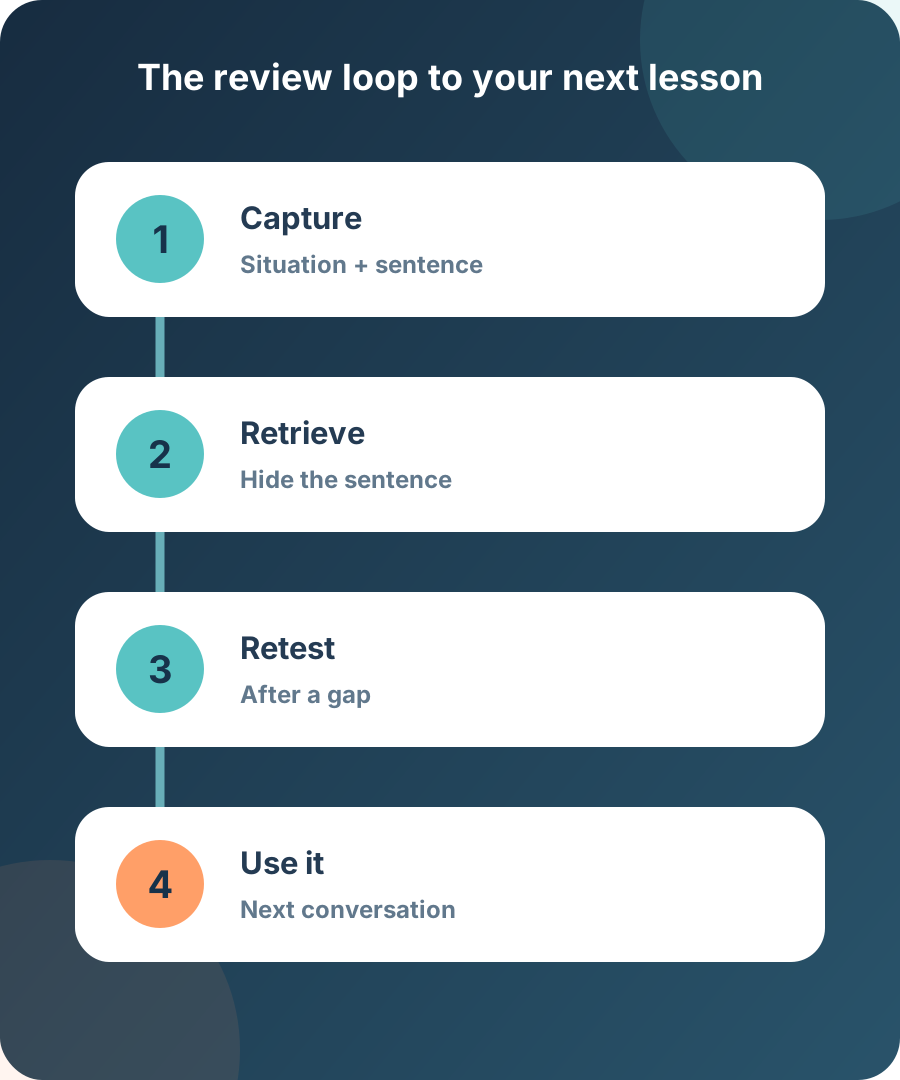
1. Three minutes: capture the situation and intended meaning
Write what happened before trying to produce perfect English:
- prompt: What did you do at the weekend?
- intended meaning: I eventually stayed home and relaxed
- what happened: I said
Finally, I stayed home, which did not express the intended nuance
During the lesson, a note such as “weekend / eventually home” is enough. If nothing is recorded, write the situation in your strongest language immediately afterwards.
2. Three minutes: verify one sentence
Use the teacher’s correction if it matches your meaning. Otherwise consult examples and save a question for the next lesson:
Is “I ended up staying home” natural in this situation?
Notice useful chunks rather than replacing words one by one. Here, end up + -ing expresses the eventual result. Do not repeatedly practise a sentence whose meaning or grammar you have not checked.
3. Two minutes: hide the answer and retrieve it
Look only at the situation and say the sentence. If it does not come, check the answer, hide it, wait briefly, and try again.
Roediger and Karpicke (2006) compared restudying prose with recalling it without the text. Restudying helped on a five-minute test, but prior retrieval led to better retention after two days and one week. The study was not about second-language conversation, so it does not prove that this routine improves speaking. It does show why rereading and being able to retrieve are different tests. Study abstract on PubMed
Karpicke and Roediger (2008) also found that dropping learned foreign-language word pairs from later tests sharply reduced delayed recall. Word pairs are not spontaneous conversation, but the finding supports trying to retrieve an answer before looking at it again. Study in Science
4. Two minutes: check the audio and say it again
Listen to a reliable recording, your teacher, or a text-to-speech tool. Notice stress and phrase boundaries. Say it once with the text, then once from the situation alone.
Speaking a sentence aloud does not guarantee that you will remember it or become broadly more fluent. Here, speech is a check: can you connect the intended situation, the English wording, and its sound?
If you have no recording or transcript
You only need one trace of the moment:
- one line in your strongest language describing what you could not say
- a sentence the teacher typed in chat
- the lesson page and exercise number
- the corrected word or word order
Do not reconstruct a teacher’s words from uncertain memory. Turn uncertainty into a question for the next lesson. If a recording or transcript is available, jump to the point where you got stuck instead of copying the whole lesson. Recording, storage, and AI-analysis features vary by provider and plan, so check the service you actually use.
Retest after a gap and before your next lesson
Something available immediately after class may disappear later. On the following day, or after another practical gap, look at the situation and try before revealing the answer. Bring difficult items back sooner and extend the gap for easy items.
Kim and Webb’s (2022) meta-analysis of 48 second-language experiments found an overall advantage for spaced over massed practice, with longer spacing outperforming shorter spacing on delayed tests. The targets, activities, feedback, and retention periods varied, so it does not prescribe one schedule for everyone. Study in Language Learning
A simple starting routine is:
- immediately after the lesson: prepare up to three items and retrieve each once
- the next day: retest from the situation
- before the next lesson: choose one item you intend to use
The important distinction is not a perfect “one, three, seven days” calendar. It is whether you leave a gap and try before looking.
Use one item in the next conversation
Choose where one phrase can enter the lesson: the opening chat, a repeated topic, a question about naturalness, or a short recap. You can say:
I wanted to say this in our last lesson.
In a small study, Lambert, Kormos, and Minn (2017) had 32 Japanese learners of English repeat three oral tasks six times. Several measures of immediate fluency changed across repetitions. This was repeated performance of the same tasks, not evidence that rehearsing one sentence guarantees transfer to later free conversation. Study in Studies in Second Language Acquisition
Use the next lesson as a check, not as proof of mastery. If the phrase still does not come, shorten it, improve the situation cue, or verify it again.
What to remove when review becomes too long
- Copying the whole lesson: preserve only the gap between what you meant and what you managed to say.
- Collecting many synonyms: choose one fitting sentence before expanding your options.
- Reading with the answer visible: useful for checking sound, not for testing retrieval. Hide it for the final attempt.
- Waiting for perfect pronunciation: try whether it communicates, ask for feedback, and refine the part that needs work.
Using SpeakGain for this routine
You can run this workflow with paper, a general notes app, or your lesson provider’s history.
If you want to keep a sentence with audio and speaking practice, SpeakGain is an app made by us. Add the English sentence to make a card with English audio and an AI-generated explanation. You can listen, optionally record yourself, check pronunciation, and meet the sentence again in review.
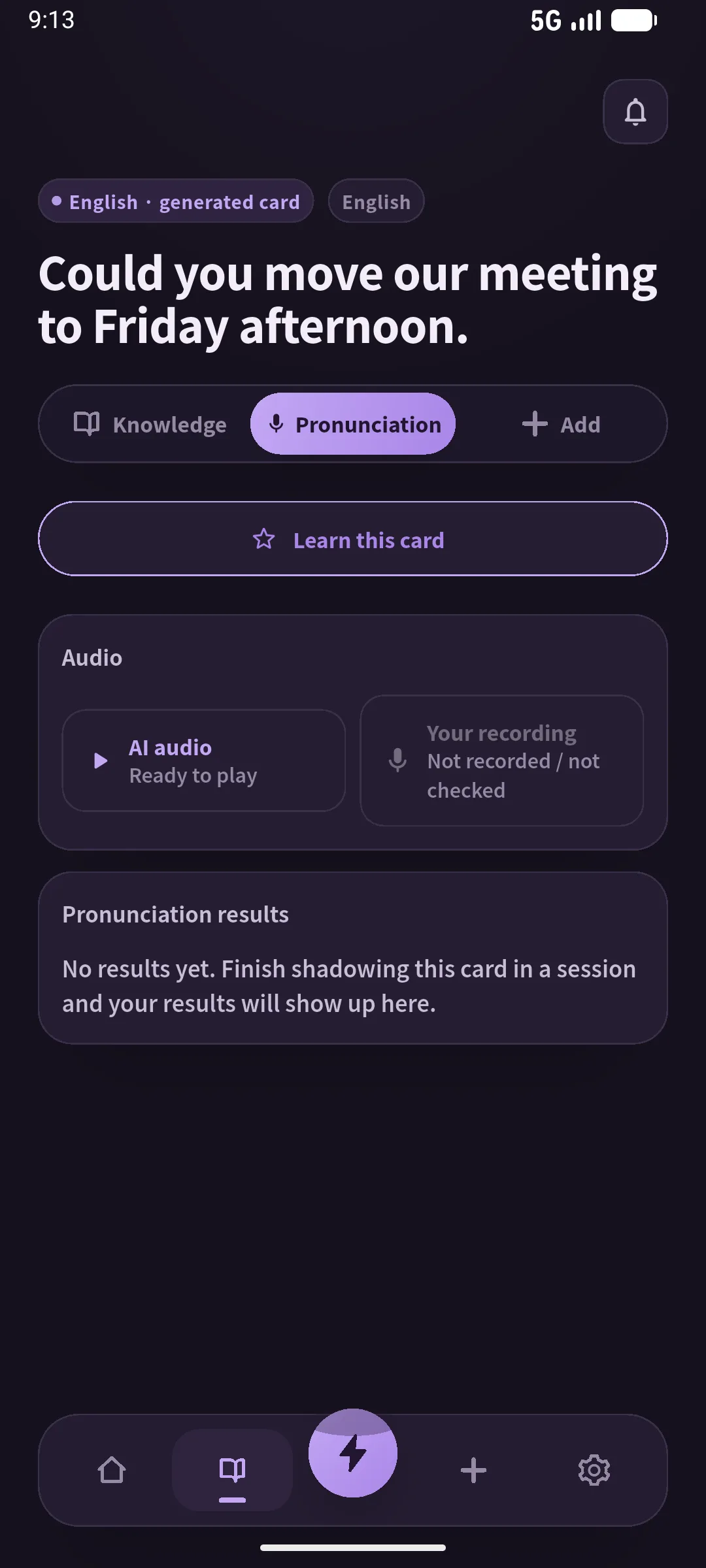
SpeakGain does not replace a teacher’s contextual judgement or a real conversation. Verify that the sentence matches what you mean, then take it back into your next lesson.
Quick answers
How long should review take?
Start with a ten-minute limit and one to three items. If they do not fit, reduce the number rather than building a larger notebook.
Should I take notes during the lesson?
If note-taking interrupts the conversation, one keyword is enough. Use chat or lesson records where available without sacrificing most of your speaking time.
What if I still cannot say it next time?
Shorten the sentence, make the situation cue more specific, and retrieve it once more without looking. Move only that item through the loop again.
Review towards the next sentence, not the perfect notebook
Choose up to three moments, verify one sentence for each, retrieve it without looking, check the sound, retest after a gap, and use one in your next lesson. Start with one thing you could not say today and turn it into the first sentence you plan to try next time.